Everything You Need to Know About Ximena Altamirano's Wool Cities Nobody Has Visited
Nine threads a centimetre, six days a street, one block woven upside down. Ximena Altamirano makes maps of cities in her Bogotá flat, and a few people have gone to check.
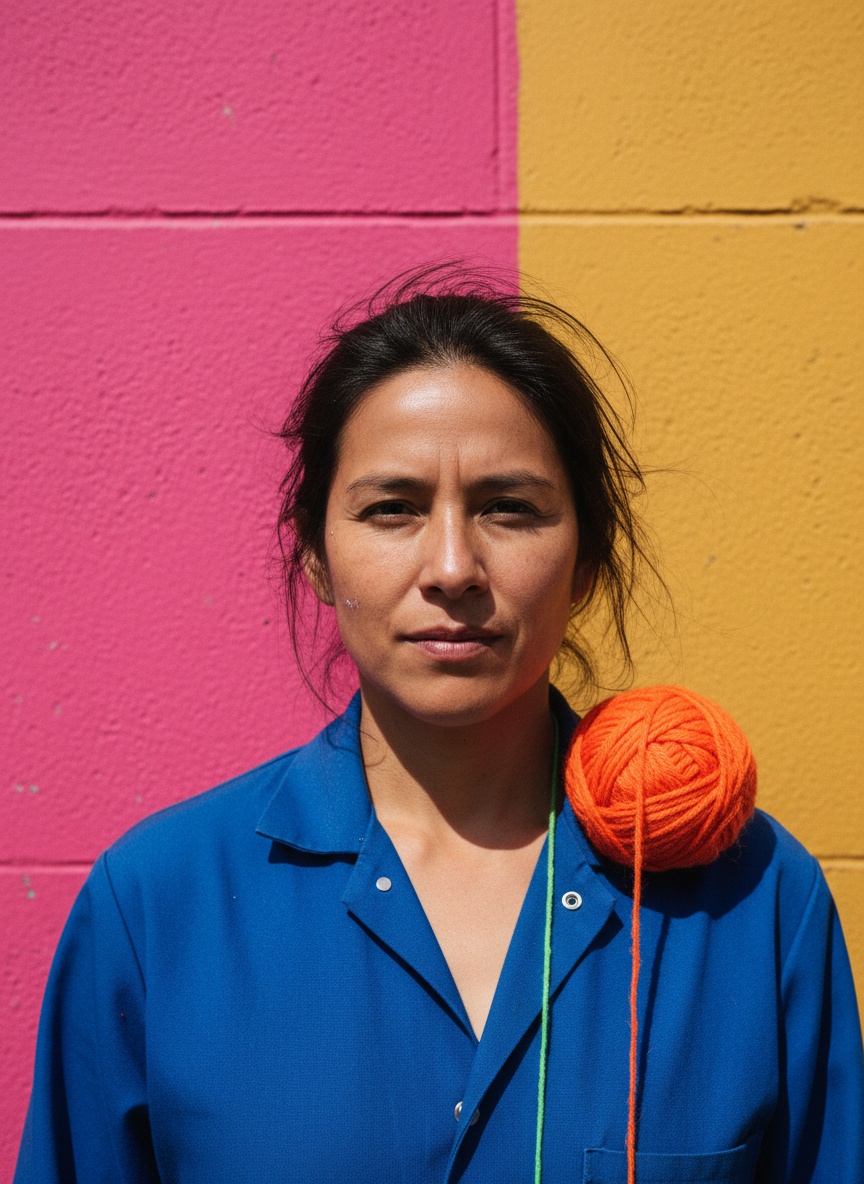
Ximena Altamirano weaves at a table by a window in Chapinero. The window faces a wall. She likes the wall.
The wool. Two-ply, from sheep in Boyacá, dyed in her bathtub. The bath is now orange. The landlord has been told it is a phase.
The thread count. Nine warp threads per centimetre, cotton. The weft is wool, pulled hard. She counts out loud. The neighbour downstairs knows the number too.
The scale. One to two thousand. A kilometre of street is fifty centimetres of cloth. One street takes six days. A district takes the winter.
The work. "Qalmund, Calle 14" is 212 by 96 centimetres. A cobalt grid. A river in cadmium orange. Parks in acid green, bus lines in hot pink, all of it slightly furred where the wool was unpicked and redone. Block 31, top right, is woven upside down. She has not fixed it. She says the block is like that.
The cities. Qalmund. Veliki Orrow. A third one she will only call the port. She has never been to any of them. Neither has anyone she knows. Where the streets come from, she says, is a notebook. The notebook is not for sale.
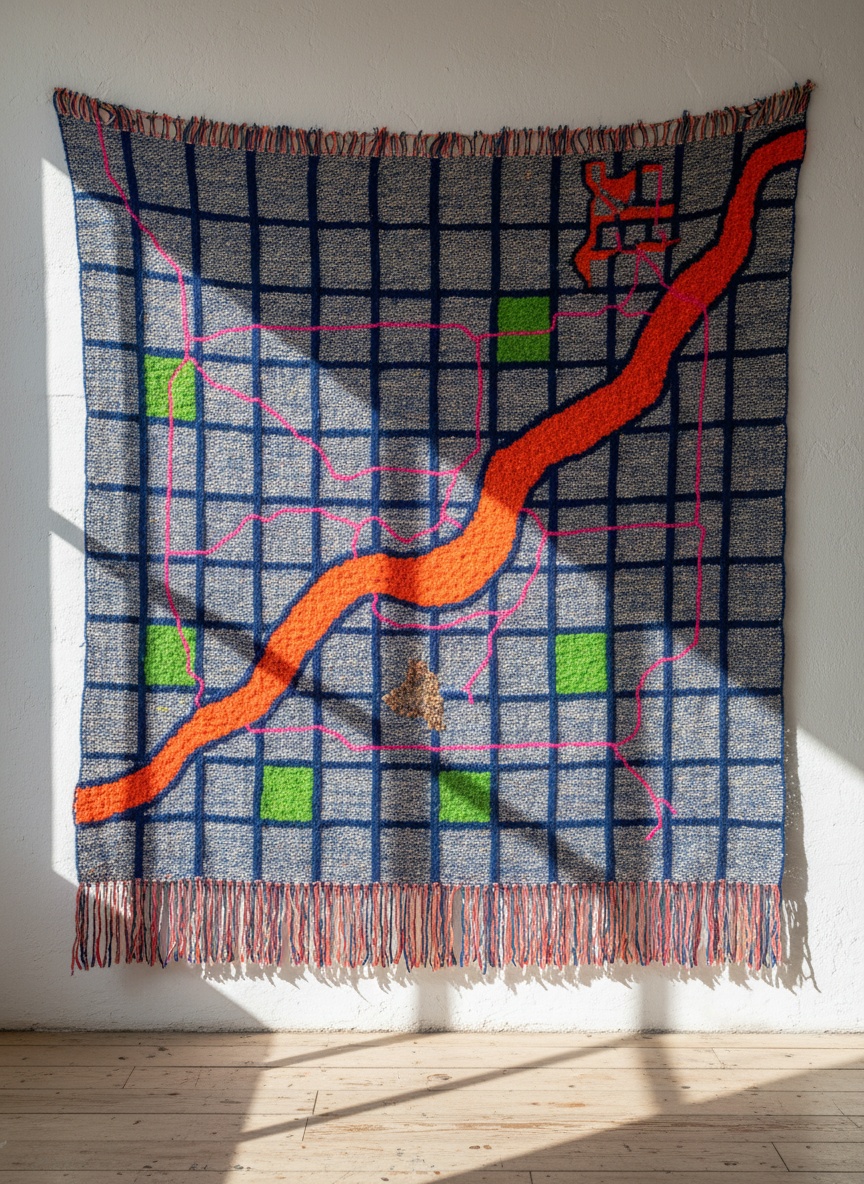
The prices. 6,400,000 pesos for a street. 38 million for a district. A collector in Cali bought two streets and asked for them to be joined. They were joined.
The visitors. Three people have gone. A retired bus driver from Bucaramanga took Calle 14 in a tube on a flight to Qalmund. He found the river. It was green. He said the orange was nicer.
A couple from Medellín went to Veliki Orrow in March with a folded photograph of the weaving. They found the tram stop. It was a bench. They sat on it for an hour, then went to lunch.
A woman who surveys roads for a living walked the whole of Calle 14. She says the weaving is accurate to within a lamppost. She did not say which lamppost.
Altamirano listens to all of it with her hands in her lap. She asks one question each time. How wide was the pavement. What did the bakery sell. What was the weather.
The couple said grey. She wove it that night, on the second street, in the same grey as the wall outside her window.