Four Grim Foh Tracks Ranked by Tempo, Kick Weight and Wreckage
Rotterdam's loudest rap group let one man with a cassette recorder follow four songs through a harbour warehouse, then counted what was left on the floor.

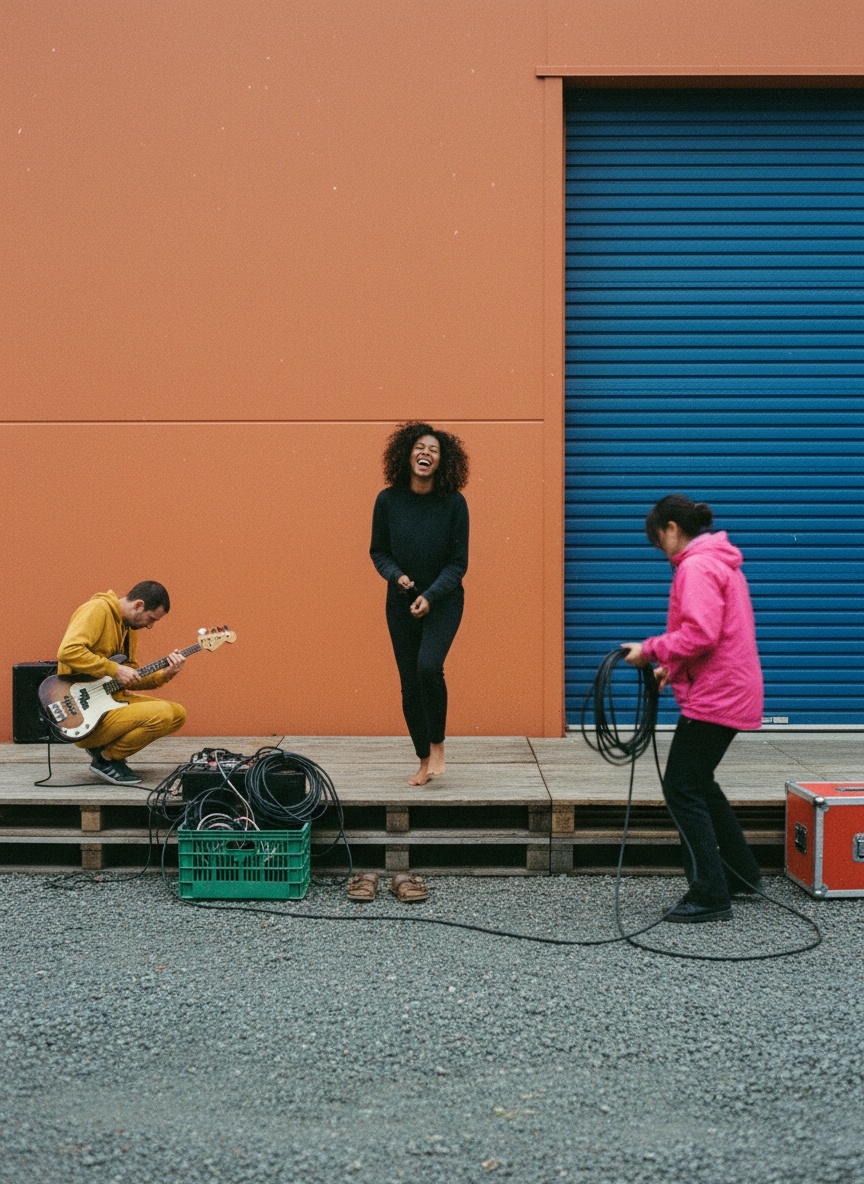
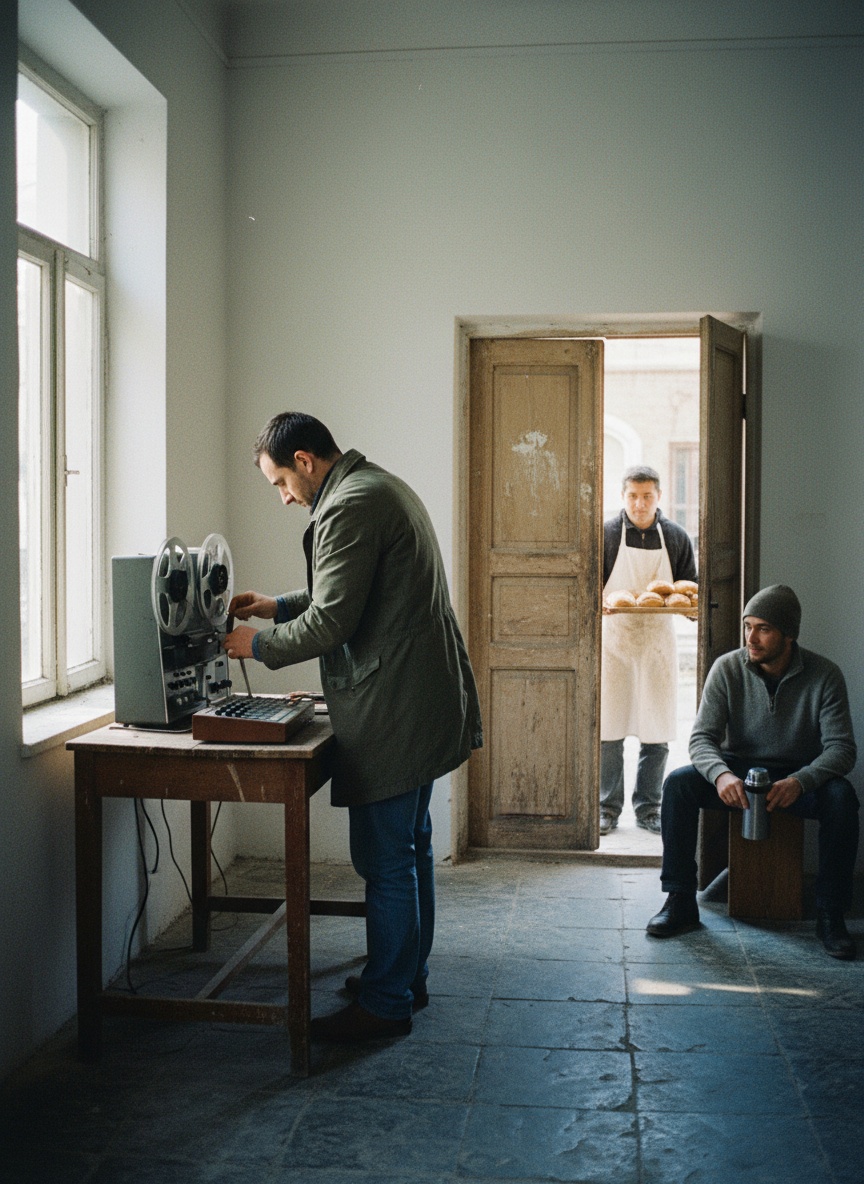
At 8:40 on a grey Monday morning, Sixes is flat on the concrete of a harbour-side warehouse in Rotterdam. His handheld cassette recorder sits one inch from a wooden pallet. Nobody speaks. The tape turns. Cathedral stands over him with a coffee and the patience of a man waiting for a kettle.
I came to rank four Grim Foh tracks. The method is simple: tempo, kick-drum weight, and what was found broken in the rehearsal room above the Feijenoord bakery afterwards. The last one is the group's own scoring system, and it is the most honest metric in music. We stayed until the streetlights came on over the quay and the high windows went the colour of a cold battery.
Fourth place: Slow Salt, 68 BPM. That is 0.88 seconds a beat, slow enough to hear each one arrive and leave. The kick is a sine sweep that drops to about 41 Hz, and this is Cathedral's territory. His bass sits so low that the cassette four-track starts to smear the edges, and he lets it. On a small speaker the track sounds like nothing. On a warehouse floor you feel it in your fillings. Broken afterwards: one window latch. Fourth is not bad. It is the track that does the least damage, and it is gorgeous.
Third place: Second Glove, 102 BPM, the fastest of the four at 0.59 seconds a beat. The kick is short and dry, a punch through a duvet, and the hi-hats are mostly Hex. He walks the hangar in the silver reflective coat Lull sewed for him, wearing the one glove he has ever owned for it, and every sweep of a torch or a passing headlight comes back off the sleeves in a flicker. It is a hi-hat made of light. You cannot sample it, so they filmed it instead. Broken afterwards: one folding chair, one leg. The coat is fine.
Second place: Eleven Takes, 91 BPM. Here is the detail I cannot put down. The snare is a 1.32 second recording of a cymbal stand failing. At 91 BPM two beats last 1.319 seconds, so the collapse fits the bar almost exactly, and nobody planned it. Sixes taped the stand eleven times in the rehearsal room, where the walls are acid green and hot pink and the orange curtain is never closed. He kept take seven. Under it sits the lid of an oil drum, and the whole thing is slowed on Cathedral's cassette four-track until the metal sounds like a slow door in a very large house. The scrap loops running through the verses are Sixes's too: a stapler, a bicycle chain, a shutter. Each loops at a slightly different length, so the groove drifts and snaps back like a person walking in a crowd. Broken afterwards: the cymbal stand, obviously, plus a second cymbal stand that was only standing nearby.

First place: Pallet, 1.8, at 84 BPM, or 0.71 seconds a beat. This is the kick-drum weight champion. The kick is a wooden pallet dropped from exactly 1.8 metres in a cold hangar on the Katendrecht quay, and the hangar does the rest. The reverb tail runs close to four seconds and has a faint metallic ring, as if the room is thinking it over. Over the top is a scrapped tram bell, which Lull owns and rings every morning at seven on the stairs above the bakery. Her vocal was recorded five metres up on the lighting rig, and you can hear the height in it. Her voice arrives from above, a little late, like weather. Rappers talk about taking the high ground. Lull has a ladder.
The pallet is the reason this one wins. Everything else on the list is a sound that happened to something. This one is a sound that was dropped on purpose, from a measured height, by four people who then stood very still to hear it land. Broken afterwards: two slats split clean in half, one clamp light with a cracked lens, and, Cathedral says, the mood of a quiet man who had just agreed to carry the pallet back up the stairs.
A word on the room, because the room is a fifth instrument. The rehearsal space above the bakery has a cobalt door and a curtain the colour of a traffic cone, and it smells of rye and warm sugar from about five each morning. Everything Grim Foh drops in there is heard by a floor that has been hit before. You can hear the wood in the tracks. You can hear the bread, if you want to.
Why do these songs sit so well at tempos between 68 and 102 BPM? My theory is that the group does not write to a click. They write to the speed of a thing falling. A pallet takes about 0.6 of a second to cover 1.8 metres. Count that against 84 BPM and you are within a hair of one beat. Gravity is the drummer, and gravity never rushes.
By five the streetlights were on along the quay and the warehouse windows had gone a deep slate blue. Sixes was sitting cross-legged beside the day's wreckage with a roll of masking tape and a marker. He labelled each broken piece with the take number and the date, and slid them into a crate. The crate already held a lot. It was marked Archive. He looked pleased.