Dee-Do Fenwick's New Snare Is a Bus Stop Pole in Walthamstow
Twenty tracks in, Dee-Do Fenwick has built a 2:58 grime skeleton from one bass note, one kettle click and one piece of street furniture, and every part of it earns its place.
The file landed at 6:00 on Tuesday morning, as it always does, with no warning and no caption. I was at a bus stop on Hoe Street with one earbud in and cold fingers. Nineteen tracks before it. This is number twenty. It is called Kettle's Done and it runs 2:58.
Seconds 0 to 3. A kettle switches itself off. Not the boil, just the click, that small plastic door closing. Then half a bar of nothing. Dee-Do Fenwick opens a track with the sound of a decision being made in a kitchen.
Seconds 3 to 27. The bass comes in and it is one note. An F, about 43.65 hertz, a sine with a little drive on top so that phone speakers can hear the harmonic and imagine the rest. It does not move. It stays on that F for a hundred and four bars. I checked the count twice, once on the bus and once at my desk, and I am still a bit moved by it.
The tempo is 140 bpm, so a beat is 0.4286 seconds and a bar is just under 1.72. That is the grime pace, the one the whole genre breathes at. Dee-Do never pushes it. There is no tempo ramp, no pre-drop acceleration, no tricks. The grid is as flat as a table, and everything is placed on it with a very light hand.
The kettle click is the hi-hat. It sits on the off-beat, always the same sample, never pitched, never filtered. By bar thirty your head waits for it like a lift door. This is how you make a hat pattern with one sound. You trust the listener to count.
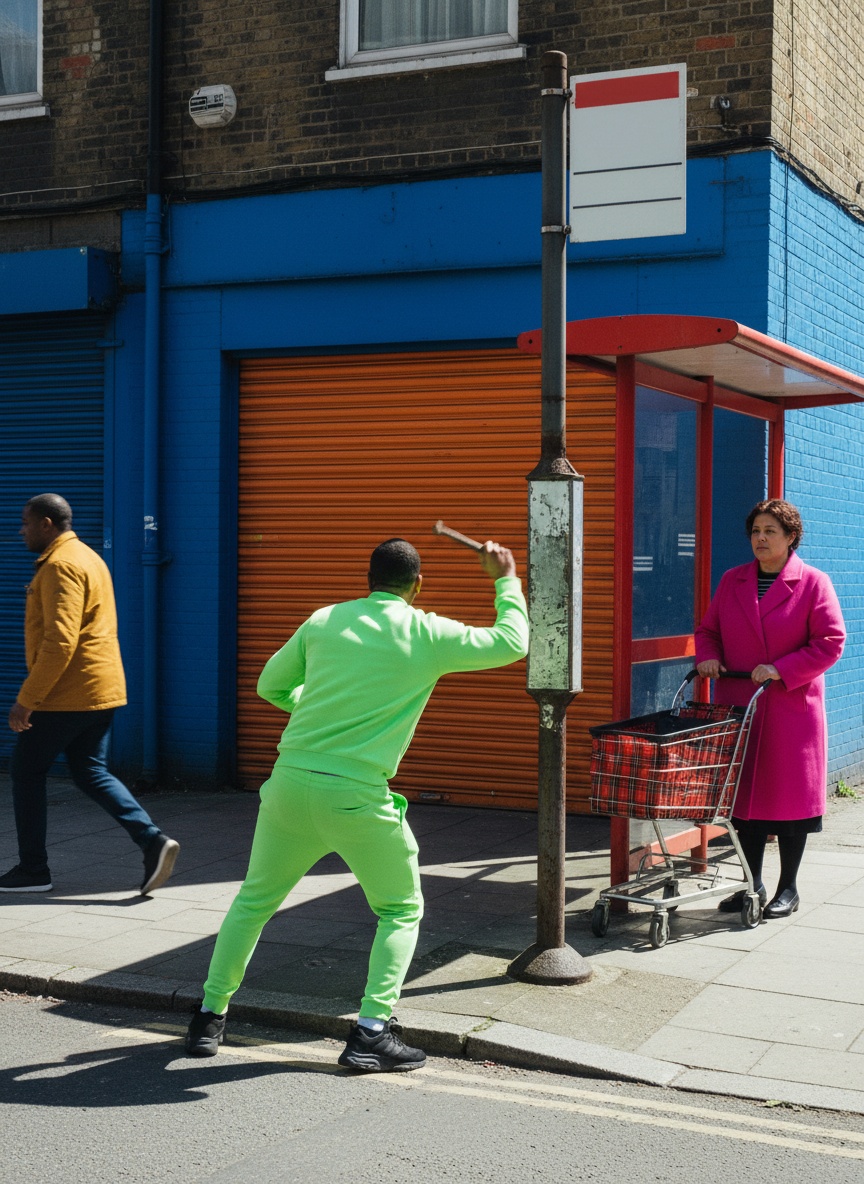
Now the snare. It is a bus stop pole. You can hear it is a steel tube hit with something short and iron, and I would bet on a tyre lever from the garage downstairs. It rings at an E flat above middle C, around 311 hertz. I put a tuner on it at second eleven. There is no pitch-shifting. The pole simply is that note, and Dee-Do chose the F to sit underneath it.
An E flat over an F is a flat seventh, two octaves up. It makes the whole track lean forward, like someone about to say something. It is the best harmonic decision of the week and it was made by a pole.
Seconds 27 to 109. Dee-Do comes in at bar 16, 0:27 on the dot. The voice is flat, close and a hair behind the beat, as if rapping from the next room with the door open. The first line is about being awake at six when everyone else is not, and then the kettle gets its own verse. I will not quote the rest. Go and hear the way the word 'click' lands exactly on the click.
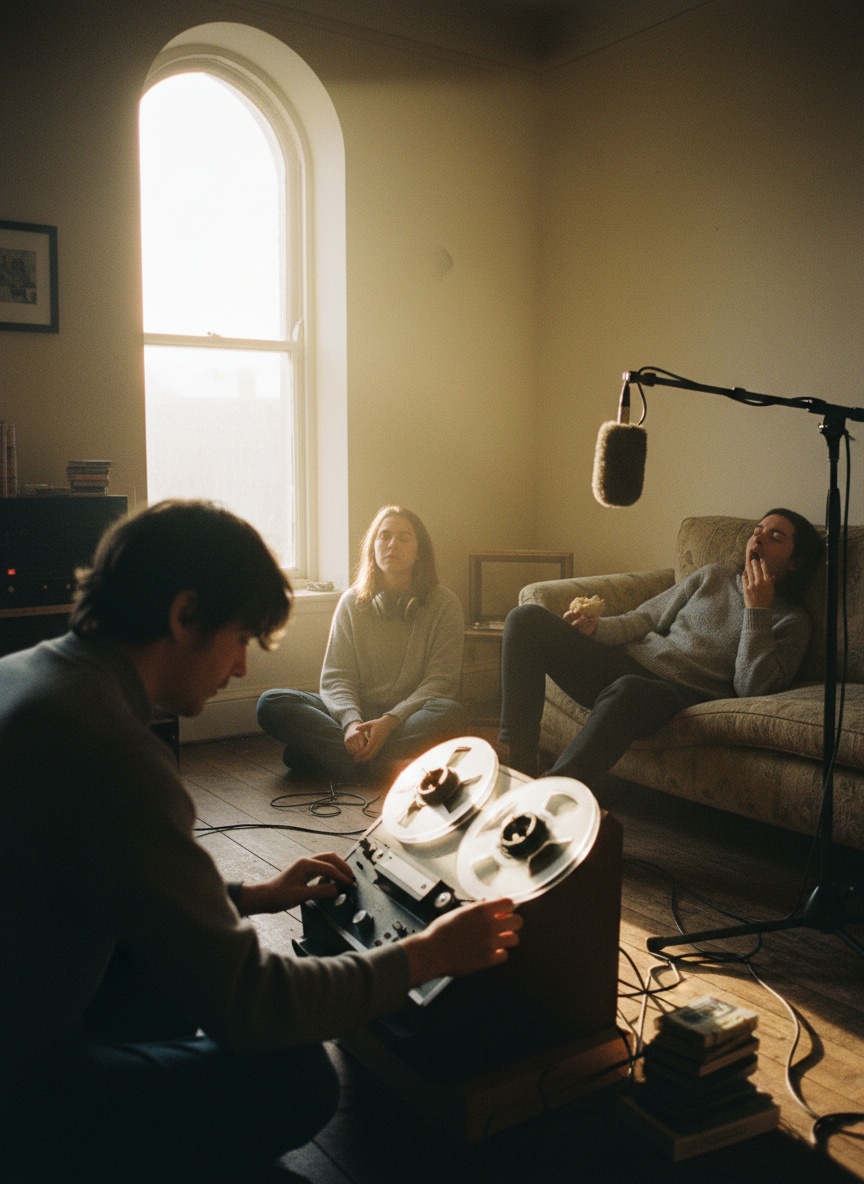
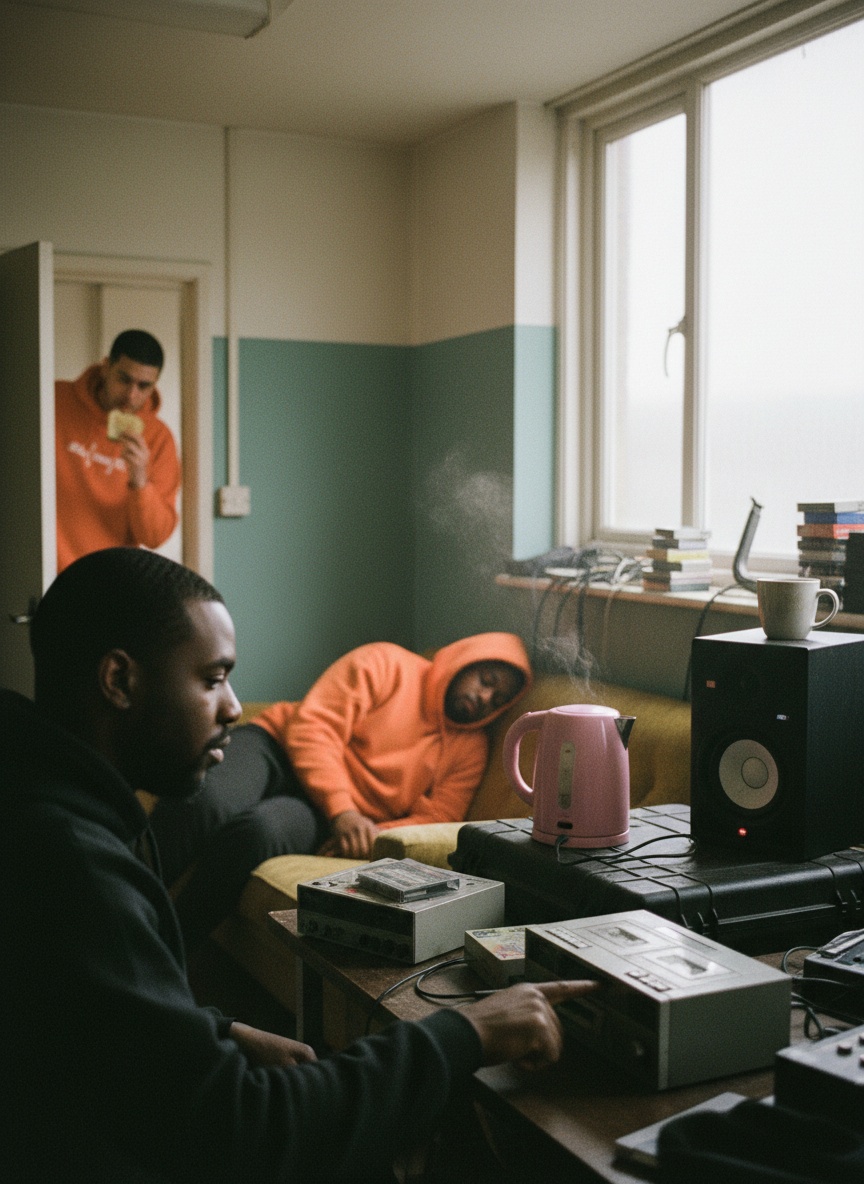
The tape. Somewhere in the middle there is a slow wobble on the F, maybe four cents, a breath in the low end around bar 60. That is a cassette. I will argue with anyone about it. The whole mix has been bounced through a tape deck and back, and the hiss under the vocal is warm and a little brown, like toast.
1:49 to 2:14. The kettle drops out for four bars. The bass and the pole carry on alone. It is like walking down stairs and finding one fewer step. When the click returns on bar 68, it is the loudest thing on the record, and it is the quietest sound in the kitchen.
2:14 to 2:58. Same F. Same pole. The vocal thins out and stops. The last second is the kettle click again, with no reverb tail and no fade. It is cut so clean that the next sound is whatever is in your room. Mine was a 6:03 bus, braking.
What I love is how few parts there are and that each has a reason. The bass is the floor. The kettle is the clock. The pole is the street. The voice is the person at the window. Dee-Do works out of a rehearsal room above a tyre garage in Walthamstow, and this is what a room like that sounds like when it is paying attention.
I played it three more times before work. On the fourth I tapped the stop's own pole with my house key on every beat two and four. My pole rang a sour, wandering D. The driver opened the doors, looked at me and waited. I let him wait one more bar.